
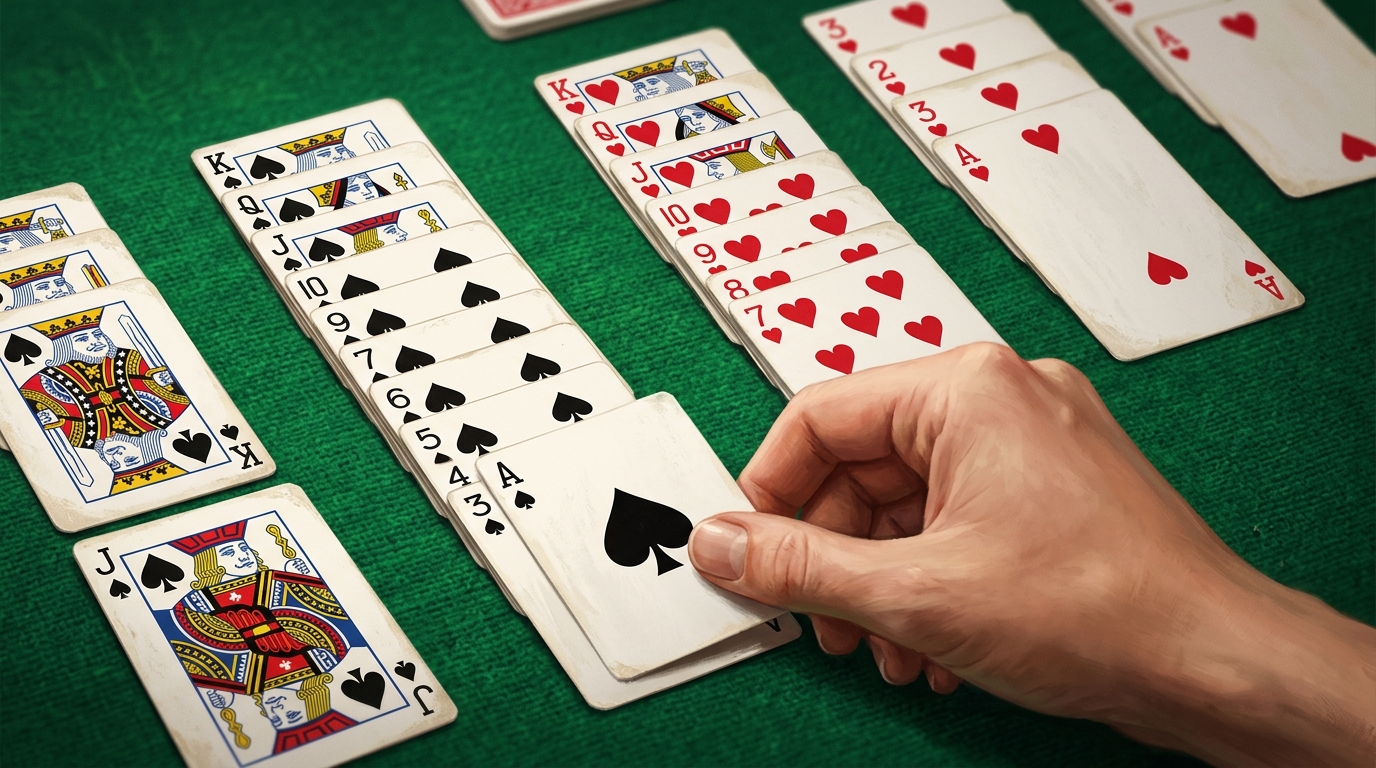
Spider solitaire strategy gets clearer the moment you stop asking whether a move is legal and start asking what it opens up next. That shift is where many players first feel the game become less random and more readable on Spider Solitaire 2.
Why the first legal move is not always the best move
A playable card can still be a bad play if it buries a useful run or wastes an empty column. Spider rewards moves that create options, not just activity.
What good Spider planning looks like
Rule guides like Bicycle's Spider Solitaire page make the structure clear, but the real skill is deciding which face-down card is worth chasing first.
Empty columns are strategic, not decorative
An open space is one of the strongest tools on the board. Using it too casually can flatten your next few turns instead of helping them.
A better way to read the tableau
Before moving, ask which hidden card you are trying to uncover and whether the move makes your next turn cleaner. That one pause changes a lot of games.
- Play on Spider Solitaire 2
- Find more spider solitaire posts on Spider Solitaire 2
- Read Bicycle’s Spider Solitaire guide
- Read Spider Palace’s rules guide
Spider solitaire strategy improves quickly when you stop rewarding motion for its own sake. The board gets easier once each move has a reason behind it.