
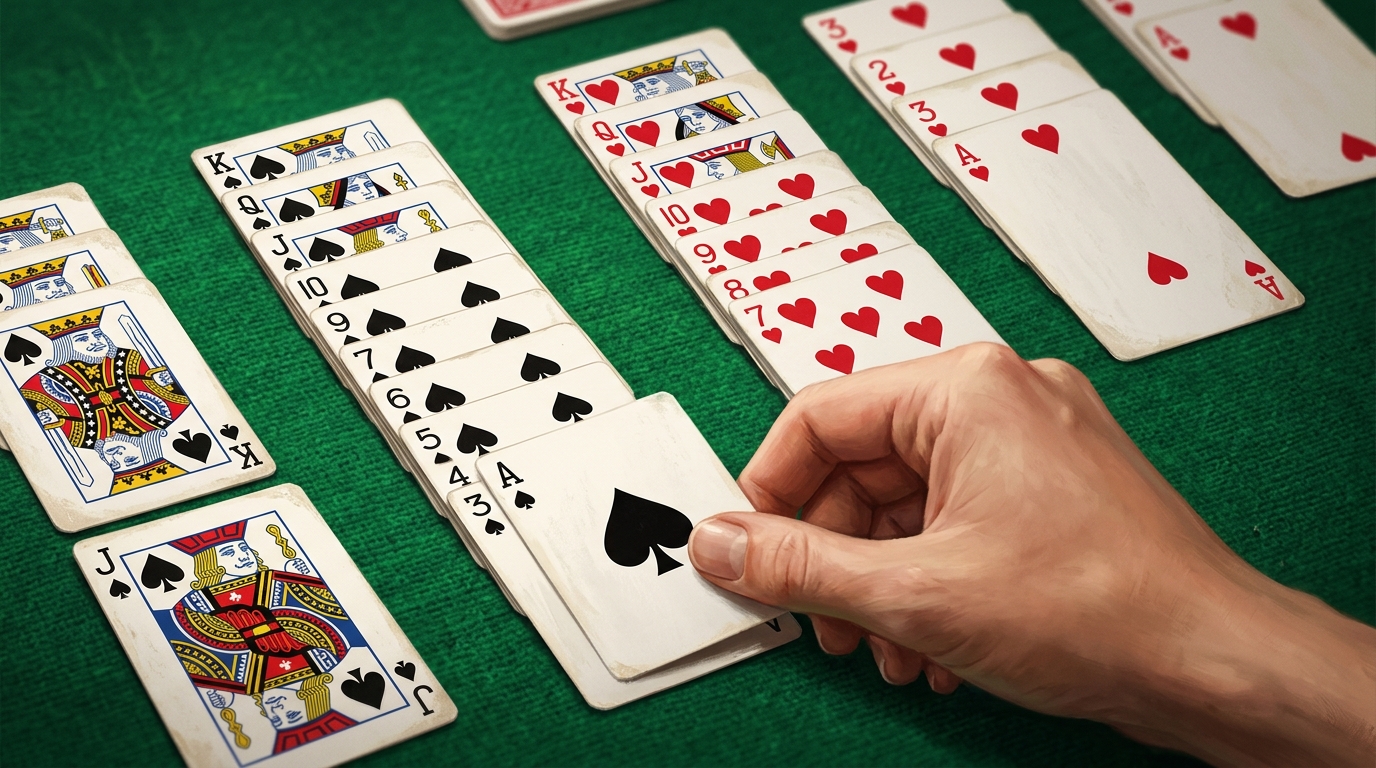
The stock is tempting because it always offers another row. It is also the moment when a loose column can become crowded, a partial run can break, and an empty space can disappear. Spider Solitaire stock deal gives that moment a name, but the useful part is the habit behind it. The aim is not to make every move look clever. It is to make the next move easier to explain.
Why Spider Solitaire stock deal matters on an ordinary puzzle
A Spider Solitaire stock deal should be treated as a board-changing event, not a button you press whenever moves slow down. Before dealing, check whether the columns are ready to receive new cards. A clean run, a useful gap, and a recently revealed card can be worth more than one extra move now. A player does not need a tournament setup or a perfect memory to use this idea. It works during a short browser session, on a printed page, or in the middle of a game when attention is starting to drift.
Spider Solitaire is a game of access under pressure. A card that is visible is not automatically useful, and a tidy stack is not automatically mobile. The strongest move often changes what you will be able to see two turns later. Empty columns, same-suit runs, hidden cards, and stock deals all compete for the same limited space. Treat each move as an exchange: what information or mobility are you buying, and what structure are you giving up? That question keeps the board readable when the columns start to crowd.
The broader history of this kind of puzzle helps explain why the habit travels well. Bicycle Spider Solitaire rules provides useful background for the spider format, while Spider Palace rules guide offers a second view of its rules or history. The sources differ in detail, but both point to the same practical lesson: a clear structure gives the player something reliable to inspect.
How to use Spider Solitaire stock deal without forcing it
Scan from left to right. Look for face-down cards that can be revealed, mixed-suit stacks that can be separated, and kings or high cards that may block a future lane. If an empty column is available, decide what it is for before dealing. The space should have a job, not just a temporary parking card. Start with a legal move and let the evidence narrow the field. If the position does not improve, stop. A good technique is a filter, not a command to keep pushing the same idea after the board has moved on.
A short routine for the next game
Use a four-question pre-deal check: can I reveal a card, repair a run, protect a lane, or move a high blocker? If one answer is yes, make that move before the stock. If all four answers are no, deal with a plan for the new row instead of hoping it solves the position.
- Reveal hidden cards when the cost is low.
- Repair mixed stacks before the new row arrives.
- Give an empty column a specific job.
- Deal only after a short readiness scan.
The mistake that makes this idea feel harder
The usual error is dealing because the visible board feels quiet. Quiet is not the same as ready. A new row can bury the card you needed, so use every available move to improve the column shape first.
What to remember when the board changes
The stock becomes less frightening when you give it a timing rule. You may still need to deal into a difficult board, but you will know whether the pressure was chosen or merely clicked. That is also why Spider Solitaire stock deal should stay practical. Use it when it describes the board in front of you, then return to ordinary reading when the evidence changes. A puzzle is allowed to ask a different question on the next move.
If Spider Solitaire stock deal does not produce a move today, that is useful information too. Leave the position clean, keep the strongest clue visible, and come back after one ordinary move. Techniques become reliable through that small return: notice the signal, test it, record what changed, and stop before the idea turns into a guess. Over time, the pause becomes part of your solving rhythm rather than a sign that the puzzle has defeated you.
Keep the session concrete. Name the clue, make one reversible change, and look again. That is enough for a useful practice round, even when the puzzle is unfinished. A short note about what changed makes the next session easier to start.
For a live session, Play more puzzles on spider-solitaire-2.com. When you want a related example, browse related posts on this site. You can also try another daily puzzle at Easy Daily Puzzle or find more puzzle guides on Easy Daily Puzzle. Keep the next step simple: play one puzzle, try the routine once, and notice which decision became clearer.